



Engineering The Future. Today
EV Charger Manufacturer in India for Smart AC & DC Charging Solutions
EV Charging Built Around the Vehicle, the Site and the Way Charging Actually Happens
Power9 is an EV charger manufacturer in India offering smart AC and DC charging solutions for apartments, workplaces, fleets, commercial locations and other EV infrastructure projects. Our charger range is designed to support different charging requirements with connected controls, safety features and project-focused deployment options.
Explore our AC and DC EV chargers or speak with our team about the charging solution required for your project.
Explore Power9 AC & DC EV Chargers
As an electric vehicle charger manufacturer, Power9 provides AC and DC charging options for different EV infrastructure requirements. Compare our charger models based on charging type, power output, installation environment and intended application.
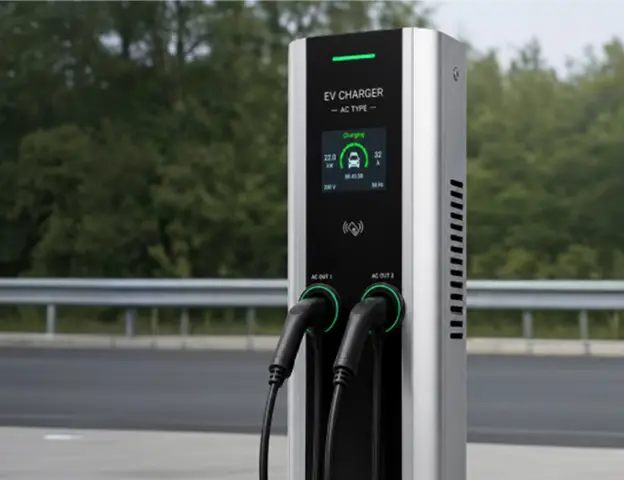
23 kW AC Type 2 Dual Gun EV Charger
11.5 kW × 2 | Dual Type 2 | Simultaneous Charging
Designed for locations where two compatible EVs may need to charge at the same time, the Power9 dual-gun AC charger provides 11.5 kW output per charging gun with 23 kW total simultaneous system output.
- 11.5 kW Per Gun
- 23 kW Total Output
- 2 × Type 2 Charging Guns
- 4G + Wi-Fi + LAN
- 4.3″ Colour Display
- IP54 Enclosure
Designed for locations where two compatible EVs may need to charge at the same time, the Power9 dual-gun AC charger provides 11.5 kW output per charging gun with 23 kW total simultaneous system output.
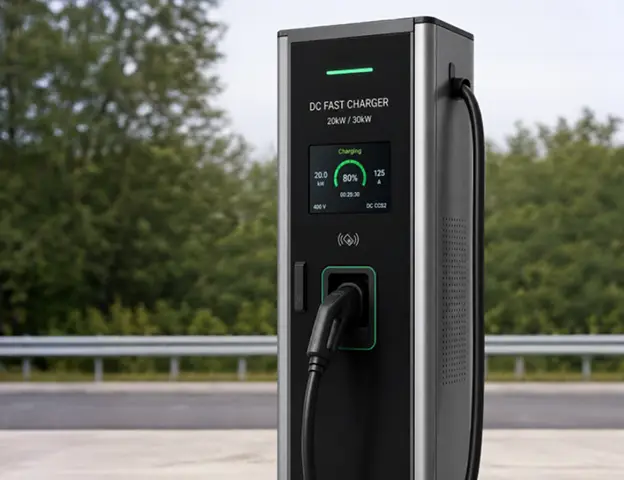
Power9 20/30 kW DC Fast Charger
20/30 kW Selectable Output | Single Gun | 200-1000 V DC
For charging environments where vehicle turnaround is more important, the Power9 DC fast charger provides selectable 20 kW or 30 kW DC output across a wide 200-1000 V DC operating range.
- 20 / 30 kW Output
- 200-1000 V DC
- 125 A Maximum Output
- 7″ Touch Display
- OCPP Connectivity
- 4G + Wi-Fi + LAN
A 7-inch touchscreen, multiple authentication methods, OCPP connectivity and remote-management functionality make the charger suitable for connected commercial charging environments.
One Charging Technology Does Not Fit Every Location
Different EV charging projects have different requirements. A residential property, workplace, fleet operation or commercial charging location may require different charger types, power levels and control features. Power9 helps businesses and project stakeholders evaluate whether AC charging, DC fast charging or a combination of both is appropriate for the intended application.
“What is the biggest charger available?”
The better question is:
“What charging capacity does this vehicle and this site actually need?”
EV Charging Solutions for Real-World Applications
Power9 EV charging solutions can be considered for different residential, commercial and mobility infrastructure requirements. Charger selection should be based on vehicle usage, parking duration, available electrical capacity, charging speed requirements and project scale.
Workplace EV Charging
Turn longer parking periods into useful charging time for employees, visitors and business vehicles.
Power9’s dual-gun AC charger can support simultaneous charging of two compatible vehicles, while DC charging can be considered where quicker turnaround is required.
Fleet EV Charging
When do vehicles return?
How much energy do they need?
When must they leave again?
How many vehicles may charge simultaneously?
Power9’s connected charging capabilities can support charging environments where monitoring, scheduling and load management are important.
Commercial EV Charging
Businesses and commercial properties need charging infrastructure that can serve today’s users without making future expansion unnecessarily difficult.
Power9 AC and DC charging solutions can be evaluated according to parking duration, vehicle demand, electrical capacity and expected charger utilisation.
Public & Destination Charging
Locations serving multiple EV users need charging equipment that is straightforward to access, monitor and operate.
Power9 charging systems include connected authentication and remote-management capabilities that can support managed charging environments.
Apartment & Shared Parking Charging
As more residents adopt EVs, residential properties need to think beyond installing a charger for the first vehicle.
A scalable charging plan should consider parking allocation, electrical capacity, cable routing, user authentication, metering, future charging points and load management.
AC or DC — Which EV Charger Should You Choose?
One charging technology does not fit every location.
Vehicle charging capability
Daily energy requirement
Electrical capacity
Number of EVs
Parking duration
Expected future growth
Important: An employee vehicle parked for eight hours does not have the same charging requirement as a commercial EV that needs to return to service quickly. The better question is: What charging capacity does this vehicle and this site actually need?
AC or DC EV Charging — Understanding the Difference
AC Charging suits:
AC charging is often appropriate when a vehicle remains parked long enough to meet its charging requirement without high-power DC charging. It can therefore be evaluated for:
Workplaces with longer dwell time
Residential or apartment parking
Commercial destination charging
Longer-dwell environments
Two-vehicle simultaneous charging
DC Charging suits:
DC charging transfers DC power to the vehicle and is generally considered where charging time and vehicle turnaround have greater operational importance. It can be useful for:
Commercial vehicles and fleets
Higher-utilisation charging locations
Faster vehicle turnaround needs
Fleet operations with fixed schedules
Public and highway charging
Connected EV Charging Built for Better Control
Power9 charging solutions include connected capabilities designed to support charger monitoring and management across suitable installations. Available functionality depends on the charger model and project configuration.
OCPP Connectivity
Multiple Network Options
Multiple Authentication
Remote Management
Load Management
EV Chargers Designed With Protection in Mind
Safety and protection features are an important part of EV charging equipment selection. Power9 chargers include model-specific electrical and operational protection features designed for their intended charging environments.v
Over-voltage protection
Under-voltage protection
Over-current protection
Over-temperature protection
Short circuit protection
Earth leakage & surge protection
Electrical surge protection
The current AC and DC charging enclosures are specified at IP54, with additional product-specific protection systems.
Compare Power9 EV Charger Specifications
Compare key charger specifications including charging type, power output, connector configuration, communication capabilities and applicable operating features. For project-specific requirements, consult Power9 for the most appropriate charger configuration
| Information Category | What Power9 Provides |
|---|---|
| Charging output | 11.5 kW × 2 (AC) | 20/30 kW selectable (DC) |
| Voltage range | 230 V AC (AC charger) | 200-1000 V DC (DC charger) |
| Connector | IEC 62196-2 Type 2 (AC) |
| Maximum current | 125 A maximum output (DC charger) |
| Communication | OCPP 2.0.1, 4G LTE, Wi-Fi, LAN |
| Authentication | RFID, NFC, QR code, App-based |
| Protection | Over-voltage, under-voltage, over-current, over-temperature, short circuit, earth leakage, surge |
| IP rating | IP54 rated enclosures on both platforms |
| Display | 4.3" TFT LCD (AC) | 7" touchscreen (DC) |
| Installation | Floor-standing |
| Dimensions | 400 × 250 × 1200 mm (AC) | 560 × 260 × 1200 mm (DC) |
| Weight | 28 kg (AC) | 55-65 kg (DC) |
| Efficiency | >94% (AC) | >93% at full load (DC) |
| Operating conditions | -25°C to +55°C operating temperature range |
| Charging management | Dynamic load management, charging scheduling, remote start/stop |
| Technical documentation | Datasheets, installation guides and technical specifications available |
As the Power9 portfolio grows, each charger will have its own detailed product page, datasheet and supporting technical information.
Frequently Asked Questions About EV Chargers in India
What type of EV chargers does Power9 offer?
Power9 currently offers an AC Type 2 dual-gun charging system and a 20/30 kW DC fast charger. The AC charger provides 11.5 kW per gun with two simultaneous charging outputs, while the DC charger offers selectable 20 kW or 30 kW charging output.
Can two EVs charge at the same time with the Power9 AC charger?
Yes. The Power9 AC Type 2 dual-gun charger is designed with two charging guns that can operate simultaneously. Each charging gun provides up to 11.5 kW, producing a combined system output of up to 23 kW.
Does Power9 support connected EV charging?
The current Power9 AC and DC charger specifications include OCPP support along with 4G, Wi-Fi and LAN connectivity. They also provide remote-management and multiple user-authentication options.
What is the difference between the Power9 AC and DC chargers?
The Power9 AC charger is a dual-gun system designed to provide simultaneous AC charging to two compatible vehicles. The Power9 DC charger provides selectable 20 or 30 kW DC output for applications where faster vehicle turnaround may be required.
Which Power9 charger is suitable for fleet charging?
Charger selection depends on fleet size, vehicles, available charging time and electrical capacity. The 20/30 kW DC charger includes fleet-oriented capabilities such as dynamic load management, scheduling and multi-site, multi-charger management.
Can Power9 chargers be installed in apartments?
The Power9 dual-gun AC system can be evaluated for compatible shared charging environments where the site’s electrical infrastructure supports the required installation. Both current charger specifications carry an IP54 enclosure rating.
Power9 – Built by Global Futuretech Private Limited
Power9 is an EV charging brand operated by Global Futuretech Private Limited, focused on AC and DC EV charging technology for residential, workplace, fleet and commercial infrastructure requirements. The company’s published Terms of Service also identify Global Futuretech Private Limited as the operator behind the Power9 website.
Address: 871/2, Survey #242/3, Demni Road, Village Dadra – 396193, UT of DNHDD, India
Planning an EV Charging Project?
Tell us about your site, charging requirements and intended application. Power9 can help you explore AC and DC charging options for residential, workplace, fleet or commercial EV infrastructure projects.